
Steak & Seafood Chain Closes 80 Locations: Lobster Capital Shifts
The seafood chain that once popularized lobster across America is facing unprecedented headwinds. Red Lobster, a 47-year-old institution, has abruptly shuttered 80 locations, signaling deep distress within the casual dining segment.
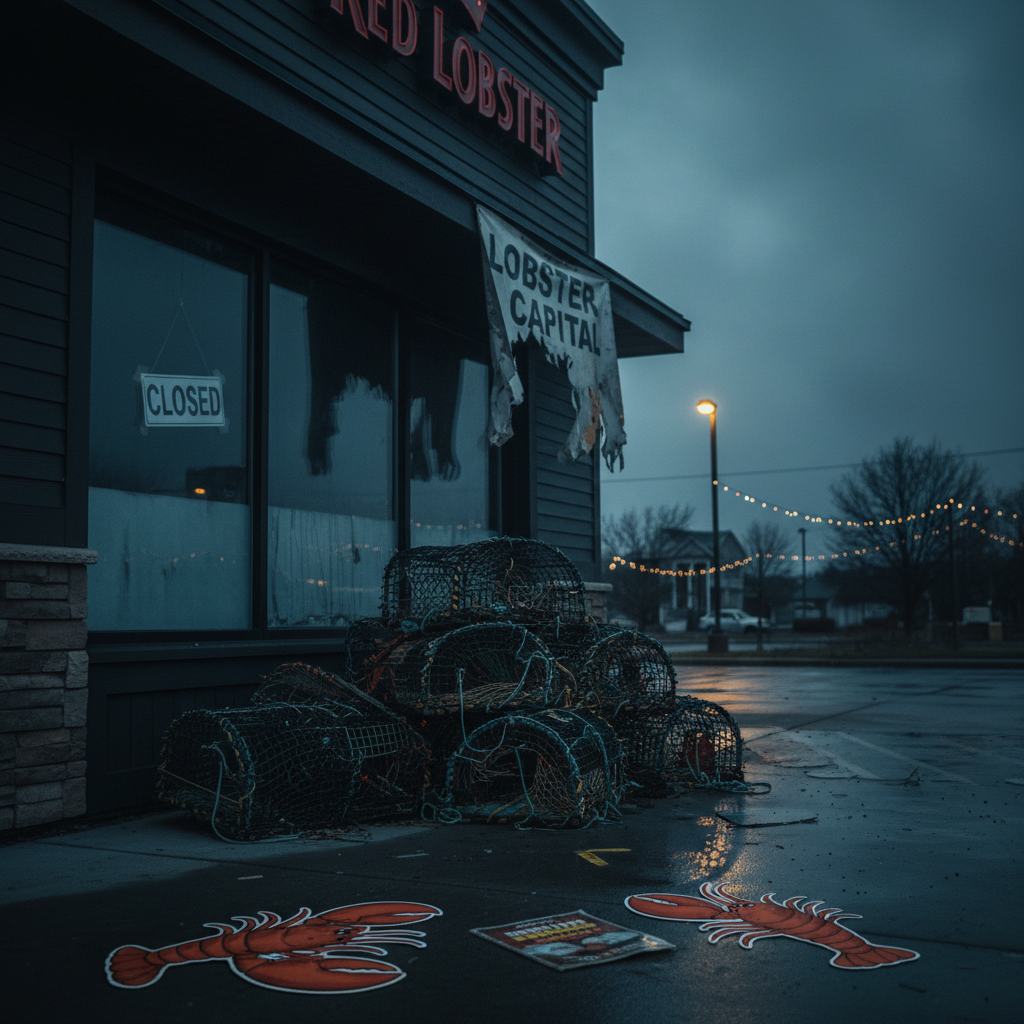
Red Lobster's Sudden Retreat: A Bellwether for Casual Dining
News broke recently that Red Lobster, the ubiquitous seafood chain that has anchored strip malls and commercial centers for nearly half a century, abruptly closed 80 of its North American locations. The move, executed with little fanfare and leaving many employees and customers blindsided, underscores the intense, multifaceted pressures currently reshaping the restaurant industry, particularly in the casual dining segment.
While the sight of darkened Red Lobster signs and locked doors is jarring, it’s not an isolated incident. This widespread closure event serves as a stark microcosm of broader economic forces, shifting consumer preferences, and strategic missteps that are pushing even established brands to their breaking point.
The Genesis of the Crisis: More Than Just Endless Shrimp
Red Lobster's current predicament is a confluence of factors, many of which can be traced back years, but have been exacerbated by recent economic shifts:
- High-Cost Operating Environment: The restaurant industry, by its nature, operates on thin margins. Recent years have seen unprecedented inflation across key inputs: food costs, labor wages, and energy prices. Seafood, in particular, is highly susceptible to supply chain volatility and environmental factors, making cost control a significant challenge. The National Restaurant Association's 2024 outlook indicates that food and labor costs remain the top operational challenges for restaurant operators.
- The 'Endless Shrimp' Debacle: In what’s often cited as a prime example of a marketing miscalculation, Red Lobster's decision in late 2023 to make their popular 'Ultimate Endless Shrimp' a permanent, year-round offer rather than a limited-time promotion backfired spectacularly. The chain reported a staggering operating loss of $11 million in the third quarter of 2023, largely attributed to the program. While seemingly a success in driving traffic, the volume of shrimp consumed far outstripped the price point, eroding profitability.
- Private Equity Ownership & Debt Burden: Like many legacy brands, Red Lobster has been subjected to multiple private equity buyouts and ownership changes. Thai Union Group, a major seafood supplier, took a significant stake and later full ownership. While private equity can bring capital and operational efficiencies, it often comes with substantial debt loads and pressure to maximize short-term profits, potentially at the expense of long-term sustainable growth or necessary capital expenditures for modernizing stores and menus. This ownership structure often leaves companies vulnerable when unexpected challenges arise.
- Shifting Consumer Tastes: The casual dining segment, which Red Lobster largely occupies, has been under pressure for years. Consumers, particularly younger generations, are increasingly opting for fast-casual concepts offering perceived healthier options, unique culinary experiences, or more convenient digital ordering. The traditional sit-down, chain restaurant model faces stiff competition from both ends of the spectrum: upscale dining and quick-service restaurants (QSRs), which have proven more resilient during economic downturns.
- Geographic Overlap & Cannibalization: With 649 locations across North America prior to the closures, Red Lobster likely faced issues of oversaturation in certain markets. The strategic closing of 80 locations, many of which were likely underperforming due to competition or high operating costs, could be an attempt to right-size the company's footprint and focus resources on profitable units.
The Immediate Aftermath: Liquidation and Uncertainty
The closures were notably abrupt. Certain locations began listing their kitchen equipment, furniture, and decor on auction sites, signaling a rapid liquidation process. This tactic is often employed by businesses facing imminent bankruptcy proceedings, attempting to recover capital quickly to satisfy creditors or fund ongoing operations of remaining units.
Reports suggest that employees at affected locations were given minimal notice, in some cases just hours. This not only creates significant personal hardship but also raises questions about corporate responsibility and communication during such large-scale organizational changes.
Expert Perspectives: Economic Indicators and Market Sentiment
Financial analysts studying the retail and restaurant sectors view Red Lobster's struggle as more than an isolated incident. "This isn't just about shrimp, this is about the cumulative effect of a tightening economy on a very specific type of business," says Sarah Jenkins, a restaurant industry consultant. "Casual dining chains operate at the intersection of consumer discretionary spending and high operational fixed costs. When inflation hits both sides of that equation, and consumers pull back, the weakest links break first."
From a macroeconomic perspective, the closures could be seen as a lagging indicator of consumer stress. While headline inflation figures have moderated, the cumulative effect of years of higher prices on everyday goods, housing, and borrowing costs has eroded household savings and discretionary income. Eating out, particularly at mid-tier restaurants, is often one of the first budget items consumers cut back on.
Proprietary trading firms monitoring consumer staples and discretionary retail often use such events as indicators of market health. A wave of closures in a major sector can signal broader economic weakness, potentially influencing positions in related equity segments or even broader market indices.
What's Next for Red Lobster and the Industry?
Red Lobster's owners now face a critical juncture. The closures are likely a precursor to a comprehensive restructuring, potentially including a Chapter 11 bankruptcy filing, which would allow the company to shed debt, renegotiate leases, and attempt a turnaround while continuing to operate remaining locations.
For the broader restaurant industry, Red Lobster's woes serve as a potent reminder:
- Adaptability is Key: Restaurants must innovate continuously, both in menu offerings and operational models, to meet evolving consumer expectations. Digital integration, delivery services, and flexible dining formats are no longer optional.
- Cost Management is Paramount: In an inflationary environment, rigorous cost control, strategic sourcing, and efficient labor scheduling are more crucial than ever.
- Strategic Marketing vs. Profitability: Promotions, while essential for driving traffic, must be carefully modeled for profitability. The 'Endless Shrimp' saga is a cautionary tale of prioritizing top-line revenue at the expense of bottom-line health.
- Financial Leverage: Private equity-backed firms, while having access to capital, often carry substantial debt. This leverage can amplify both gains and losses, making them particularly vulnerable during economic downturns.
The Red Lobster story is far from over. Its path forward will be closely watched as a potential playbook – or warning – for other legacy brands grappling with the complex challenges of the modern culinary landscape. The promise of affordable seafood, once a cornerstone of American dining, is now being tested by the relentless currents of economic change and evolving tastes.
Frequently asked questions
How many Red Lobster locations closed?
Red Lobster abruptly closed 80 of its North American locations, primarily in the US and Canada.
Why did Red Lobster close so many locations?
A combination of factors led to the closures, including rising food and labor costs, the financial strain of the 'Ultimate Endless Shrimp' promotion, significant debt from private equity ownership, and shifting consumer preferences away from traditional casual dining concepts.
What is the 'Endless Shrimp' debacle?
Red Lobster made its 'Ultimate Endless Shrimp' promotion permanent year-round in late 2023. While popular, the volume of shrimp consumed at a fixed price caused Red Lobster to incur an $11 million operating loss, significantly impacting its profitability.
What might happen to Red Lobster next?
The closures are likely a precursor to broader financial restructuring, such as filing for Chapter 11 bankruptcy. This would allow the company to shed debt, renegotiate leases, and attempt to stabilize its operations and remaining locations.
What does this mean for the casual dining industry?
Red Lobster's situation highlights the intense pressures on the casual dining segment, including high operating costs, changing consumer tastes, and the importance of adapting business models. It serves as a bellwether for other legacy restaurant chains facing similar challenges.