
Dollar Edges Up on Rate Hike Bets; China Eyes Trump Factors
The US dollar extended its modest ascent in early trading, propelled by an increasingly hawkish tone from central bankers and subsequent re-pricing of interest rate hike probabilities. Concurrently, geopolitical attention remains sharply focused on China, where the potential influence of former President Donald Trump adds a layer of complexity to future economic and trade relations.
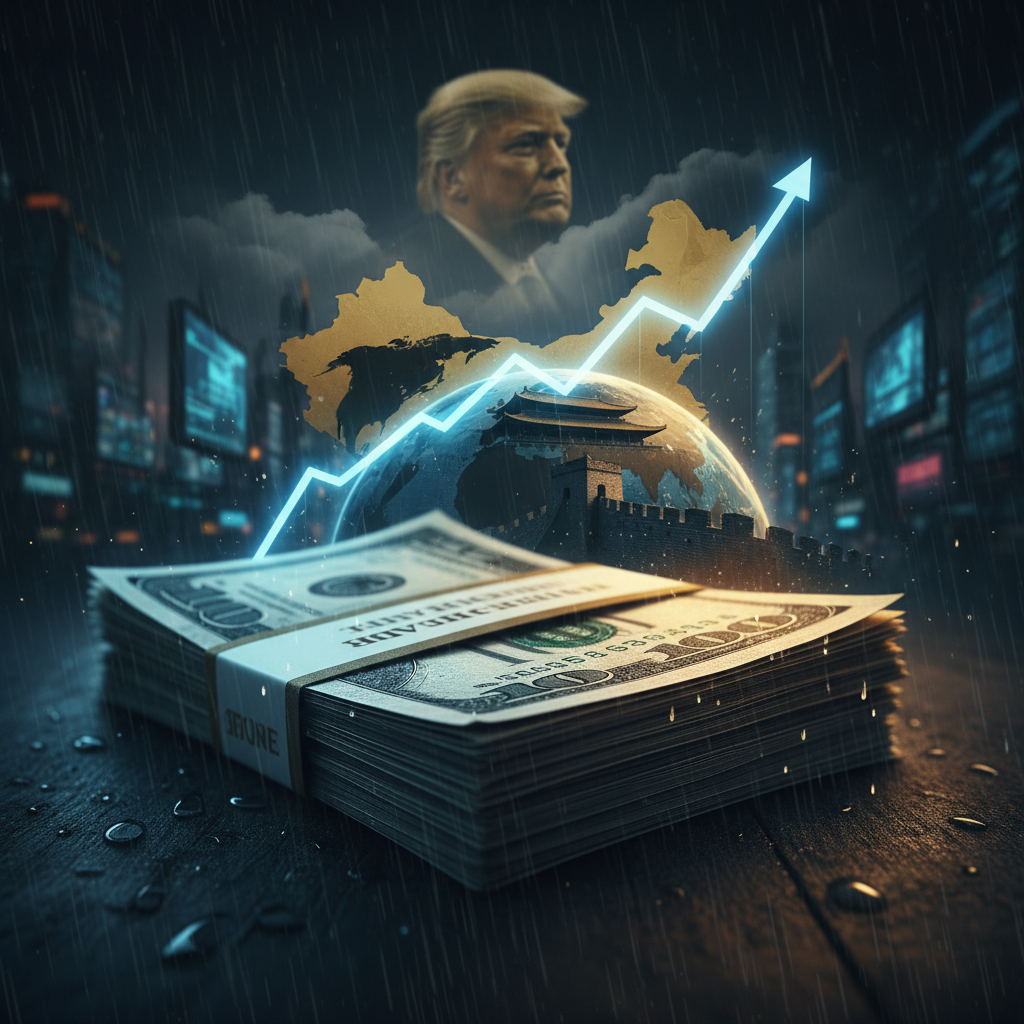
The US dollar extended its modest ascent in early trading, propelled by an increasingly hawkish tone from central bankers and subsequent re-pricing of interest rate hike probabilities. Concurrently, geopolitical attention remains sharply focused on China, where the potential influence of former President Donald Trump adds a layer of complexity to future economic and trade relations.
Dollar’s Ascent: A Data-Driven Re-evaluation
The Greenback demonstrated a resilient performance against a basket of major currencies, notably the Euro and the Japanese Yen. The Dollar Index (DXY) charted a course above its 50-day moving average, signaling renewed bullish momentum. This movement is not arbitrary; it's a direct consequence of shifting expectations within the bond market regarding future Federal Reserve policy.
Recent inflation data, particularly the sticky core Consumer Price Index (CPI) readings and robust wage growth figures, have injected a dose of reality into what was previously a relatively dovish market consensus. Previously, traders had begun to price in earlier and more aggressive rate cuts by the Fed later in the year, anticipating a quicker disinflationary trend. However, the persistence of inflation, particularly in service sectors, has forced a re-evaluation.
Fed officials, in recent public appearances and minutes from their latest meeting, have consistently emphasized a "higher for longer" narrative. This rhetorical shift implicitly suggests a greater tolerance for maintaining restrictive policy for an extended period, or even, if data warrants, the possibility of further tightening. The market, always a forward-looking mechanism, has taken note. CME FedWatch Tool data now indicates a notable increase in the probability of at least one more 25 basis point hike in the coming months, a stark contrast to expectations merely weeks ago. This repricing directly translates into higher Treasury yields, making dollar-denominated assets more attractive and thus strengthening the dollar.
Furthermore, relatively strong economic indicators from the U.S., such as surprising resilience in the labor market and consumer spending, continue to differentiate the American economy from its European and Asian counterparts, where growth forecasts remain more subdued. This divergence in economic performance underpins the dollar's relative strength, as capital naturally flows towards regions promising higher returns and greater stability.
China in the Crosshairs: The Lingering Shadow of Trump
While the dollar's movements are largely driven by domestic monetary policy expectations, the global economic narrative is invariably influenced by geopolitical currents. China, the world's second-largest economy, finds itself at a pivotal juncture, with market participants keenly observing political developments, particularly those involving former U.S. President Donald Trump.
Trump's previous administration initiated a significant shift in U.S.-China relations, characterized by aggressive tariff impositions, trade disputes, and increased scrutiny of Chinese technology companies. These actions sent ripples through global supply chains and profoundly impacted the trading landscape for numerous industries, from semiconductors to agriculture. While the current Biden administration has maintained a firm stance on certain aspects of U.S.-China relations, there has been a less erratic and more predictable approach compared to the Trump era.
The prospect of Trump's return to the political stage introduces a considerable dimension of uncertainty for China. His stated intentions, often communicated through social media and rallies, include proposals for even higher tariffs on Chinese goods, potentially reaching punitive levels. Such policies, if implemented, could trigger a renewed and intensified trade war, disrupting established trade flows and impacting global growth. For China, this signifies a potential headwind to its export-oriented economy, which is already navigating challenges from a property sector downturn and sluggish domestic demand.
Chinese policy makers are likely already strategizing for various scenarios. This could involve accelerating efforts towards domestic consumption-led growth, diversifying export markets, and bolstering indigenous technological capabilities to reduce reliance on foreign components, particularly from the U.S. The yuan (CNY) has shown relative stability recently, but heightened U.S.-China tensions historically tend to put depreciatory pressure on the Chinese currency as capital outflows become a concern and international trade becomes more challenging.
Expert Framing: Navigating the Confluence of Forces
Market strategists are highlighting the dual nature of current market drivers. "The Federal Reserve's commitment to fighting inflation, even at the expense of potentially slower growth, is the primary force behind the dollar's recent appreciation," noted a senior currency analyst at a prominent New York-based investment bank. "However, this narrative is constantly being layered with geopolitical considerations, especially regarding the future of U.S.-China trade policy. The market hates uncertainty, and Trump's potential re-entry into the political arena creates a significant unknown for China-exposed assets and the global economic outlook."
Another analyst, specializing in emerging markets, emphasized the defensive nature of the dollar in such an environment. "When global trade relations become strained, and the specter of protectionism looms, capital tends to flow towards perceived safe-havens. The U.S. dollar, backed by the largest economy and deepest capital markets, naturally benefits from such risk-off sentiment, irrespective of challenges in its domestic inflation fight."
Key Takeaways for Traders and Investors
- Dollar Strength Persistence: The "higher for longer" interest rate narrative from the Fed suggests continued underlying support for the U.S. dollar. Traders should monitor upcoming inflation data, labor market reports, and Fed commentary closely for any shifts in this outlook.
- Yield Differentials: The widening interest rate differentials between the U.S. and other major economies (like Japan and the Eurozone) will continue to make the dollar an attractive carry trade currency, buttressing its strength.
- China Volatility: The political cycle in the U.S., particularly concerning a potential Trump candidacy, will introduce significant volatility into assets sensitive to U.S.-China relations, including the Chinese yuan, commodity prices, and multinationals with substantial exposure to both economies. Traders in these instruments should prepare for increased headline risk.
- Geopolitical Risk Premium: The ongoing geopolitical complexities will likely embed a "risk premium" into market pricing, potentially causing sharp, swift movements based on political rhetoric or policy speculation.
Outlook: A Macroeconomic Tug-of-War
The immediate future points to a macroeconomic tug-of-war. On one side, persistent inflation pressures and a hawkish Fed lean will continue to provide tailwinds for the U.S. dollar. On the other, the global economic landscape will remain acutely sensitive to political developments, particularly the evolving relationship between the U.S. and China. For proprietary trading firms and individual traders, this environment necessitates a dynamic approach, characterized by vigilance for economic data, geopolitical headlines, and a readiness to adjust positions quickly. The interplay of monetary policy tightening and geopolitical uncertainty will define market movements for the foreseeable future, demanding strategic foresight and robust risk management.
Frequently asked questions
Why is the US dollar strengthening?
The US dollar is strengthening due to several factors: persistent inflation data leading the Federal Reserve to adopt a 'higher for longer' interest rate policy, robust US economic data compared to other major economies, and the dollar's role as a safe-haven asset amidst global uncertainties.
How do interest rate hike expectations affect the dollar?
When markets anticipate higher interest rate hikes, it increases the attractiveness of dollar-denominated assets. Higher rates mean better returns on investments (like bonds), drawing capital into the US and thereby increasing demand for the dollar, which strengthens its value.
What is the significance of Trump's potential influence on China's economy?
Former President Trump's previous administration implemented aggressive tariffs and trade policies against China. His potential return could signal a revival of similar, or even more severe, protectionist measures, which would significantly disrupt global trade, impact Chinese exports, and introduce considerable uncertainty for the global economy.
What does 'higher for longer' mean for monetary policy?
'Higher for longer' implies that central banks, particularly the Federal Reserve, intend to maintain high interest rates for an extended period to ensure inflation is brought back to target levels, rather than cutting rates prematurely. This suggests a sustained period of restrictive monetary policy.
How should traders approach this market environment?
Traders should adopt a dynamic approach, closely monitoring economic data (especially inflation and labor market reports), Federal Reserve communications, and geopolitical headlines related to US-China relations. Robust risk management and a readiness to adjust positions in response to rapidly changing information are crucial in this environment of intersecting monetary policy and geopolitical uncertainty.